.png)
What Turf Infill Actually Does — and Why It Matters More Than Most People Think
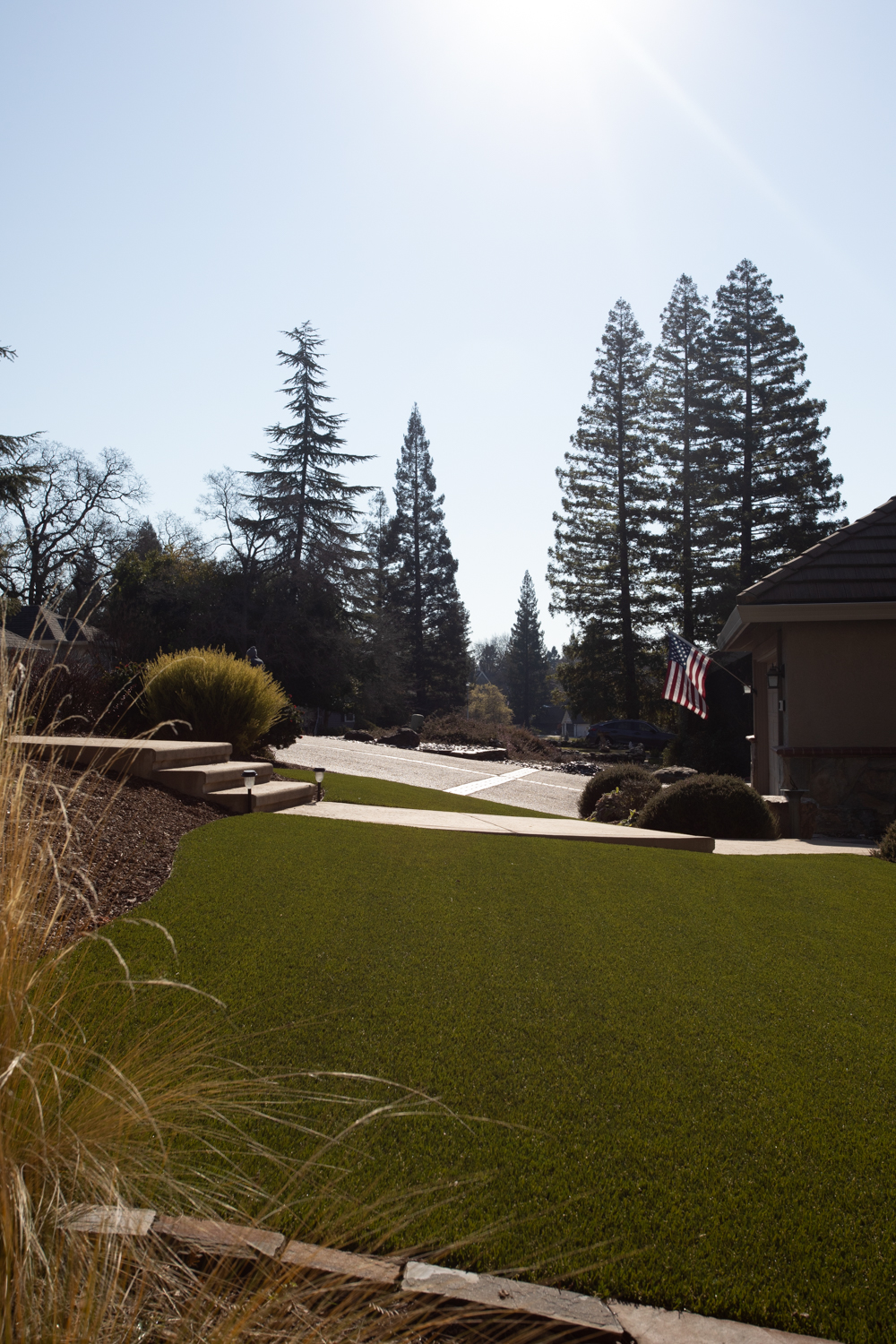
Infill is the part of a turf installation nobody thinks about until it's wrong. Most homeowners focus on the turf product and the base — which are important — but infill is what determines how the turf feels, performs, and holds up over time. Let me explain what it actually does.
What Infill Is
Infill is the material that gets brushed into the turf fibers after installation. It sits at the base of the blades, holding them upright, adding weight and stability to the turf system, and in the case of antimicrobial infill, actively treating the surface. The most common types are silica sand, crumb rubber (less common now), and coated sand with antimicrobial treatment.
What Infill Does
Blade support is the primary function. Turf fibers want to lie flat under foot traffic. Infill pushes them back up. Without it, a heavily trafficked area looks matted and worn within months.
Infill also adds weight that keeps the turf from shifting, reduces drainage pooling by filling the void space between fibers, and moderates surface temperature to a small degree.
Antimicrobial Infill for Pet Owners
For dog runs and pet areas, antimicrobial infill is the single most important upgrade available. Standard silica sand does nothing about bacteria or odor. Antimicrobial coated infill actively neutralizes what dogs leave behind. The difference in long-term odor management is significant.
Silica Sand for Putting Greens
Putting green turf uses dense, fine silica sand infill compacted to a specific level that gives the surface its playing characteristics. The infill application on a putting green is almost a precision process — too much and the ball rolls slow, too little and the surface doesn't have the right firmness.
We'll spec the right infill for your specific project at no charge.