.png)
Signs of a Bad Artificial Turf Installation (And What to Do About It)
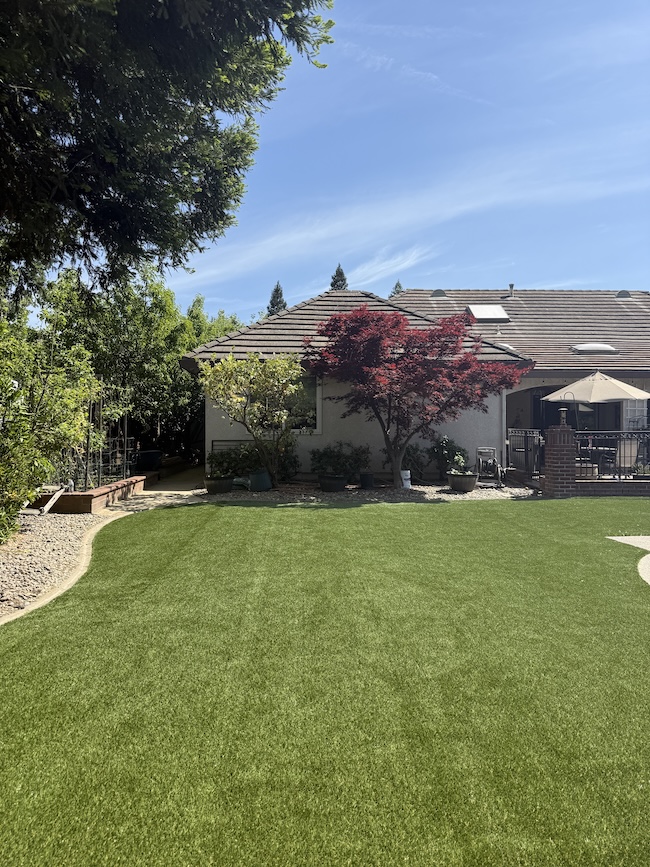
We get calls from Sacramento homeowners who hired another company and ended up with a turf installation that looks wrong or is falling apart. Some issues are obvious. Others only show up after the first rainy season or the first hot summer. Here's exactly what to look for and what you can actually do about it.
Visible Seams
The clearest sign of a bad install. Professional turf seams should be invisible at normal standing distance. If you can see a line where two pieces of turf meet, the installer either cut the grain direction wrong, used insufficient seam tape, skipped the adhesive, or rushed the cure time.
What to do: Document it with photos taken from the typical viewing distance (not close-ups). If you're within your workmanship warranty period, contact the installer in writing and demand they come fix it. Reputable installers will re-seam at no cost. Fly-by-night operations will ghost you.
Bubbling or Wrinkles
Turf that bubbles up in areas — usually visible as soft or spongy patches when you walk across the surface — almost always indicates drainage failure, improper compaction, or inadequate perimeter securing. Water has gotten underneath the turf and is pushing up the surface or pooling in the sub-base.
What to do: This is a structural problem, not a cosmetic one. It will get worse over time. Contact the installer immediately. If they won't fix it, you may need a second contractor to partially remove the turf, address the underlying drainage or compaction issue, and reinstall.
Dips, Lumps, and Uneven Surface
A professionally installed turf surface should be almost perfectly flat. Visible dips or raised areas indicate inadequate base preparation — either insufficient excavation, improper grading, or skipped compaction steps.
What to do: Minor unevenness sometimes self-corrects over a few months as foot traffic works the surface. Significant dips or lumps won't fix themselves. Document with photos. Walk across the turf with a long straight edge (2x4 or level) and photograph any gaps between the board and the turf surface.
Edges That Lift or Pull Away
Properly installed turf is nailed or stapled every 4–6 inches along every edge and every 18 inches across the interior field. Edges that curl up, pull away from hardscape, or separate from borders indicate either insufficient perimeter nails, incorrect nail type, or installation onto a sub-base that wasn't compacted firmly enough to hold nails.
What to do: A good installer can re-nail problem edges in under an hour. If your installer won't come back, this is a reasonable DIY repair — galvanized 6-inch landscape staples every 4 inches along the affected edge. Don't use standard nails; they'll rust and pop up.
Pet Odor That Won't Go Away
If you have dogs and the yard is developing persistent urine smell, the installer either used the wrong infill or skipped antimicrobial infill entirely. Standard silica sand doesn't neutralize odor. Over time, urea builds up in the infill and the smell becomes permanent.
What to do: Topical enzyme treatments help short-term. The real fix is removing the existing infill with a power brush and re-applying antimicrobial coated infill. This is doable without removing the turf. A reputable installer will do this if they specified the wrong product originally.
Color That Looks Fake Up Close
Quality turf has color variation — multiple greens, sometimes brown thatch woven in at the base. Cheap turf is one uniform shade of bright green. If your turf looks dramatically different up close than it did in the sample book or from the street, you may have been installed with a different product than what you agreed to buy.
What to do: Pull out your original contract and product specification sheet. Compare the product name, face weight, and manufacturer to what's actually on your yard. If they don't match, you have a contract dispute — not a warranty issue. Start by contacting the installer with documentation in writing.
Visible Fraying or Unraveling
The turf backing should be cleanly bound at every cut edge. Visible threads, unraveling fibers, or backing material exposed at seams indicates the installer didn't properly seal cut edges or used inadequate cutting technique.
What to do: For minor edge fraying, clear outdoor adhesive applied to the backing stops further unraveling. For significant unraveling, the seams need to be opened and re-sealed with proper cut-edge treatment.
Water Pooling After Rain
A properly draining turf installation should have no standing water within 30 minutes of rainfall ending. Water that pools on the surface for hours or days indicates sub-base compaction failure, inadequate drainage engineering, or grading that directs water onto the turf rather than away from it.
What to do: Document with photos or video during and immediately after rain. This is a major installation failure. A reputable installer will excavate affected areas and correct drainage at no cost within warranty. If they refuse, you may need a formal warranty claim process or small-claims action depending on contract terms.
Shifting or Moving Turf
Turf that visibly moves, shifts, or develops wrinkles months after installation indicates the sub-base wasn't compacted to specification, or the perimeter securing system wasn't adequate. This often shows up after the first wet winter.
What to do: Significant shifting requires partial removal, base correction, and reinstallation. This is an expensive repair and should fall under workmanship warranty if the failure occurred within the warranty period.
What Good Installation Actually Looks Like
For comparison, a properly installed turf yard should display:
- Invisible seams at standing distance
- Flat, level surface across the entire field
- Edges that remain tight against hardscape and borders
- Consistent color and fiber appearance
- No odor in pet-use areas
- No standing water 30+ minutes after rain stops
- No shifting, movement, or wrinkling after the first year
When to Cut Your Losses
If you're facing multiple significant issues and the original installer won't respond to warranty claims, consider:
- Filing a complaint with the California Contractors State License Board (CSLB.ca.gov)
- Filing a claim under the contractor's license bond if they're licensed
- Getting written estimates from a reputable installer for repair vs. full replacement
- Consulting with a contract attorney if the amount justifies it
Not every bad install can be fully salvaged. Sometimes the right answer is to get it done correctly by a professional and treat the original install as a lesson.