.png)
Can You Install Artificial Turf Yourself? The DIY Reality Check
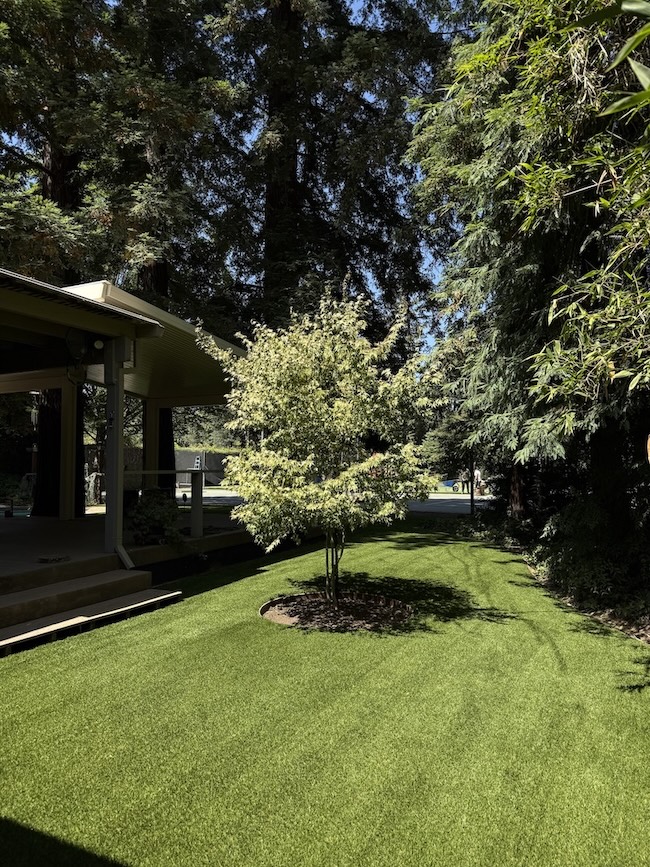
Every year I get calls from Sacramento homeowners who started a DIY turf install, hit a wall, and need it finished. Sometimes we can salvage the work. Sometimes we have to tear out and start over. I want to give you the honest picture of what DIY turf installation actually takes, so you can make a real decision instead of the optimistic one.
Can You Do It Yourself?
Yes, legally and technically, a homeowner can install artificial turf on their own property in Sacramento. There are no licensing requirements for doing it yourself. Hardware stores and online retailers will sell you turf rolls. YouTube has plenty of tutorials.
The question isn't whether it's possible. The question is whether the time, money, physical effort, and quality risk of DIY turf actually comes out better than hiring a professional.
What the Full DIY Process Actually Involves
Here's the honest sequence, with realistic time estimates for a 500 square foot front yard:
- Lawn removal — manually remove existing grass and 3–4 inches of soil. Rent a sod cutter ($80/day) and prepare for a full day of heavy work, plus disposal. (1–2 days, $200–$400 in rental and disposal)
- Drainage assessment and grading — ensure your yard drains correctly toward escape points, not toward your foundation. (0.5–2 days depending on yard conditions)
- Base material purchase and delivery — 3 inches of road base over 500 sq ft is about 4 cubic yards. Delivery ($80–$150) and transport from driveway to yard is physical work. (0.5 day, $250–$500 in material)
- Base spreading and leveling — rake and level the base to proper grade. (1 day)
- Compaction — rent a plate compactor ($80/day) and make multiple passes. (0.5 day, $80 rental)
- Turf delivery and cutting — typical 15-foot wide rolls require careful measurement and cutting. (1 day)
- Seaming — seam tape and adhesive costs, plus the technique to invisibly join pieces. (0.5 day, $100 in seaming materials)
- Edge securing — nailing or stapling every 4–6 inches along all edges. (0.5 day)
- Infill application — spread silica sand over the surface and broom it into the fibers. (0.5 day, $150–$300 in infill material for 500 sq ft)
- Grooming and cleanup — brush the fibers upright and clean up excess materials. (0.5 day)
Realistic total time: 7–10 full days of labor for someone with no prior experience.
Realistic total material and rental cost: see current pricing on our pricing page for comparison.
Where DIY Installs Typically Go Wrong
Inadequate Base Preparation
The most common DIY failure. Homeowners skip the full excavation depth, skip proper compaction, or use insufficient base material. The turf looks fine at install. Six months in, visible dips, soft spots, and uneven grade appear.
Drainage Problems
DIY installers almost never engineer for drainage properly. First major storm and the yard is holding water, the seams are separating, and the sub-base is washing out.
Visible Seams
Professional seams require specific technique. DIY seams are almost always visible from normal viewing distance.
Improper Nailing
Too few nails and edges lift. Too many nails and the turf bunches. Nails installed at wrong angles pop up over time.
Wrong Infill Amount
Under-infilled turf has blades that immediately lie flat under foot traffic. Over-infilled turf feels crunchy.
Product Mismatch
Online turf retailers sell wildly different product quality. The same "40mm turf" from two suppliers can have radically different face weights, backings, and UV ratings.
The Real Cost Comparison
For that same 500 square foot front yard:
DIY total: $3,000–$4,000 in materials, rentals, disposal — plus 7–10 days of your time.
Professional installation: See current pricing on our pricing page for installed rates. Most projects complete in 1–2 days with warranty coverage.
When DIY Actually Makes Sense
DIY can be the right answer if:
- You have construction or landscaping experience already
- The project is small (under 300 sq ft)
- The area is low-visibility (side yard, utility area)
- You have access to quality materials (not Home Depot rolls)
- You have the tools, the time, and the physical capability
- You're okay with a slightly imperfect result
When It Doesn't
DIY is almost always the wrong call if:
- It's your front yard
- The project is over 500 sq ft
- You need it to pass HOA architectural review
- You're in an older neighborhood with drainage complications
- You don't have 7–10 full days available
- You care about resale value
The Rescue Scenario
If you started a DIY install and want help finishing — or realize partway through that it's not working — call us. We've rescued a lot of half-done projects.
Free Sacramento estimate — honest advice whether to do it yourself or hire us.