.png)
What Happens to Artificial Turf in a Sacramento Heat Wave
Sacramento heat waves are brutal. We get multi-day stretches above 105°F every summer, occasional days pushing 110°F+, and the question I get more than any other in July: how does artificial turf actually handle this? Here's the straight answer, with real temperatures, real tradeoffs, and real solutions.
How Hot Does Artificial Turf Actually Get?
On a 105°F Sacramento day in direct sun, artificial turf surface temperatures typically reach 140–160°F. During extreme heat events at 110°F ambient, we've measured surface temperatures as high as 170°F in unshaded, south-facing areas.
For context: asphalt in direct sun reaches similar temperatures. Concrete patios get to 130–140°F. Natural grass, because of transpiration, stays significantly cooler — often 85–95°F on the same day.
The heat gap between turf and natural grass is real. The gap between turf and other hardscape surfaces is minimal.
What That Actually Means for Use
A 140–160°F surface is too hot for bare feet. It's too hot for dogs' paws. For practical purposes, during Sacramento's peak summer afternoon hours (roughly 1–5 PM on hot days), unshaded turf is not a barefoot surface.
This is the honest reality, and I don't try to minimize it during estimates. It's a real characteristic of all synthetic turf products — including the "heat-reducing" turfs marketed by various manufacturers. The difference between a standard turf and a premium "cool" turf in 110°F ambient is roughly 10–15°F reduction, which is meaningful but doesn't turn a 160°F surface into a comfortable one.
Does the Heat Damage the Turf Itself?
No, not under normal conditions. Quality artificial turf is engineered with UV-stabilized fibers and heat-resistant backings designed to withstand Sacramento's climate for 15+ years without degradation.
The scenarios where heat actually damages turf:
- Reflected sunlight from windows — low-E glass windows can focus sunlight and create spot temperatures high enough to melt fibers. This is a documented issue with specific window types in modern homes. If you have this problem, a window film or exterior shade screen addresses it.
- Direct flame contact — a hot BBQ coal, a fire pit spark, a cigarette ash can melt individual fibers. Keep heat sources away from turf or protect the area with a fire-resistant mat.
- Sustained heat above 200°F — beyond normal ambient conditions. Not a real-world concern for Sacramento heat itself.
For everyday heat wave conditions, even 115°F+ ambient, the turf itself is fine.
The Quick Hose-Rinse Solution
A two-minute hose rinse drops surface temperature by 30–40°F almost instantly. Go from 160°F to 120°F. From 150°F to 110°F. The cooling effect lasts 15–45 minutes depending on humidity, wind, and sun intensity.
For families with kids or dogs who want to use the yard during hot afternoons, the rinse-before-use routine becomes habit quickly. Water a minute or two before the kids go out. Let the dog out after a quick spray. It's not a burden — it's a 90-second addition to your existing routine.
Shade Strategy: The Real Solution
If heat performance matters to your specific yard use, shade is the single best investment.
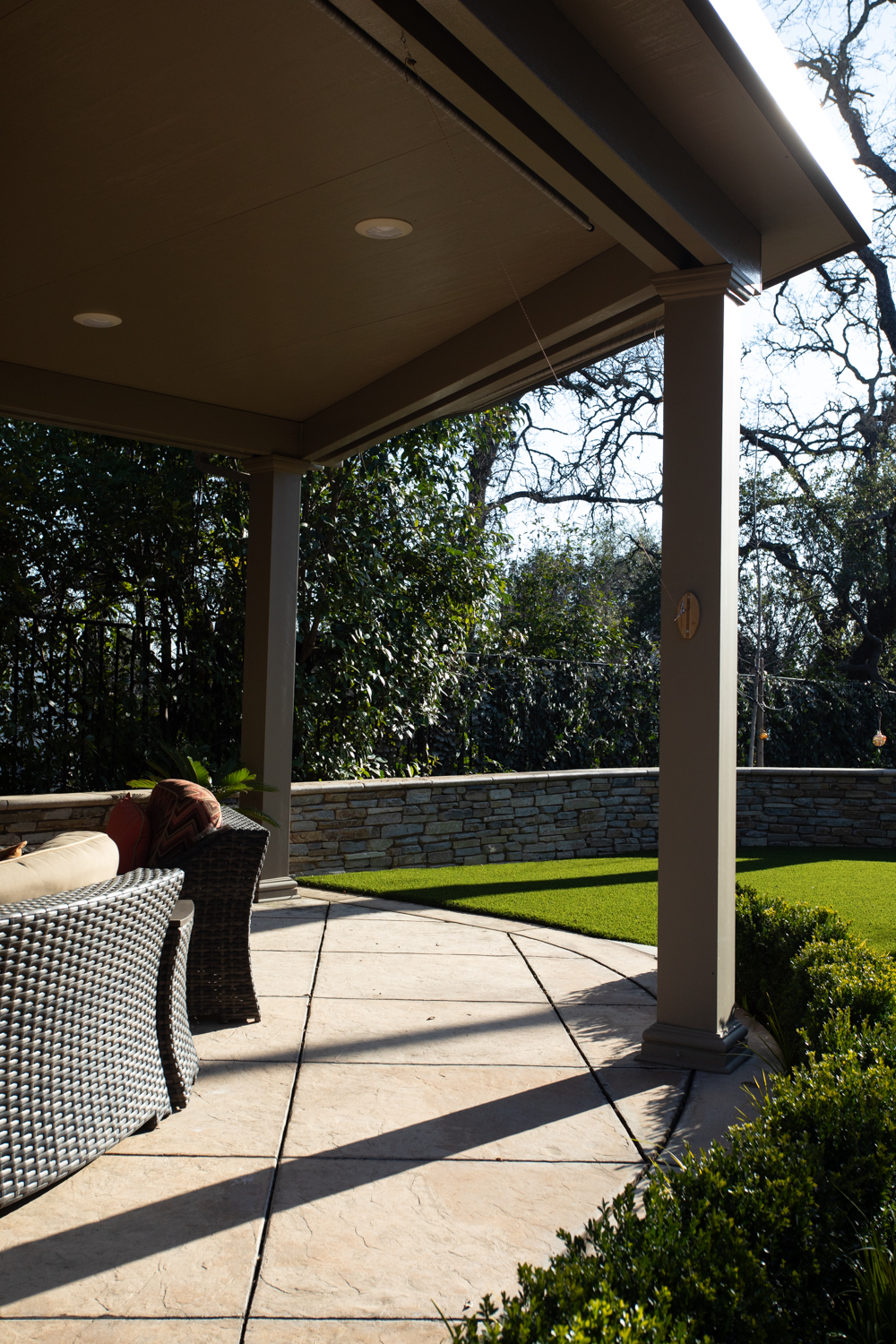
Pergolas and patio covers: a well-placed pergola over a primary use area drops ambient temperature by 15–20°F and keeps surface temperature below 120°F even during 110°F heat waves. The combined effect of shade plus occasional rinse makes the area comfortable throughout summer afternoons.
Shade sails: a less expensive option ($300–$1,500 depending on size and materials) that provides significant UV and heat reduction. Can be mounted between existing structures or posts installed for the purpose.
Strategic tree placement: for long-term thinking, planting deciduous shade trees south or west of usable turf areas creates cooling during summer with winter sun access after leaves drop. This is a multi-year strategy but genuinely effective.
Tall umbrellas: the lowest-cost solution ($100–$400) for small, focal use areas. Move as needed. Not permanent but effective for seasonal use.
Heat-Reducing Turf Products
Several manufacturers offer "cool turf" products with enhanced heat reflection properties. These use proprietary fiber technologies, lighter color tones, or reflective coatings to reduce heat absorption. Performance claims typically cite 10–15°F temperature reduction versus standard turf.
The tradeoffs: these products typically cost 20–40% more than standard turf, and the aesthetic can be slightly different (some have a slightly lighter green tone). For homeowners where heat is a primary concern, the premium can be worth it. For most installations, standard premium turf with good shade strategy delivers comparable usability at lower total cost.
Infill Choice Matters
Infill type affects surface temperature to a modest degree. Light-colored silica sands reflect more solar heat than dark-colored or rubber infills. Some premium infills are specifically coated with heat-reducing or moisture-retaining compounds.
The effect is meaningful but not dramatic — 5–10°F reduction versus standard silica. For households where heat is a top concern, premium heat-reducing infill is worth discussing. For standard installations, regular silica is fine.
The Comparison to Natural Grass in Heat Waves
Critics of artificial turf often compare its heat performance unfavorably to natural grass. This is accurate in terms of surface temperature — natural grass transpiration produces a cooling effect turf cannot replicate.
But in Sacramento's actual 105°F+ conditions, natural grass is frequently brown, patchy, and dormant. The comparison isn't "hot turf vs. cool green grass" — it's "hot turf vs. dying brown grass that's still 110°F on the soil surface." Real-world use patterns for homeowners with kids and dogs in 110°F afternoons are similar regardless of lawn type: avoid peak heat hours, water before use, prefer shaded areas.
What to Expect by Month
A realistic month-by-month surface temperature picture for unshaded Sacramento turf:
- May: 90–110°F peak, comfortable for use most days
- June: 100–130°F peak, rinse before barefoot use on hot days
- July: 120–160°F peak, rinse essential for afternoon barefoot use, prefer shade
- August: 120–160°F peak, same as July, this is when shade strategy earns its keep
- September: 100–140°F peak, returning to more usable temperatures by month end
- October–April: comfortable surface temperatures throughout
Seven months of the year, turf is as usable as you'd expect. Three months require thought about timing and shade. That's the honest picture.
Free Sacramento estimate — we'll assess sun exposure and shade options for your specific yard.