.png)
Artificial Turf Rebates in Sacramento: What's Actually Available in 2026
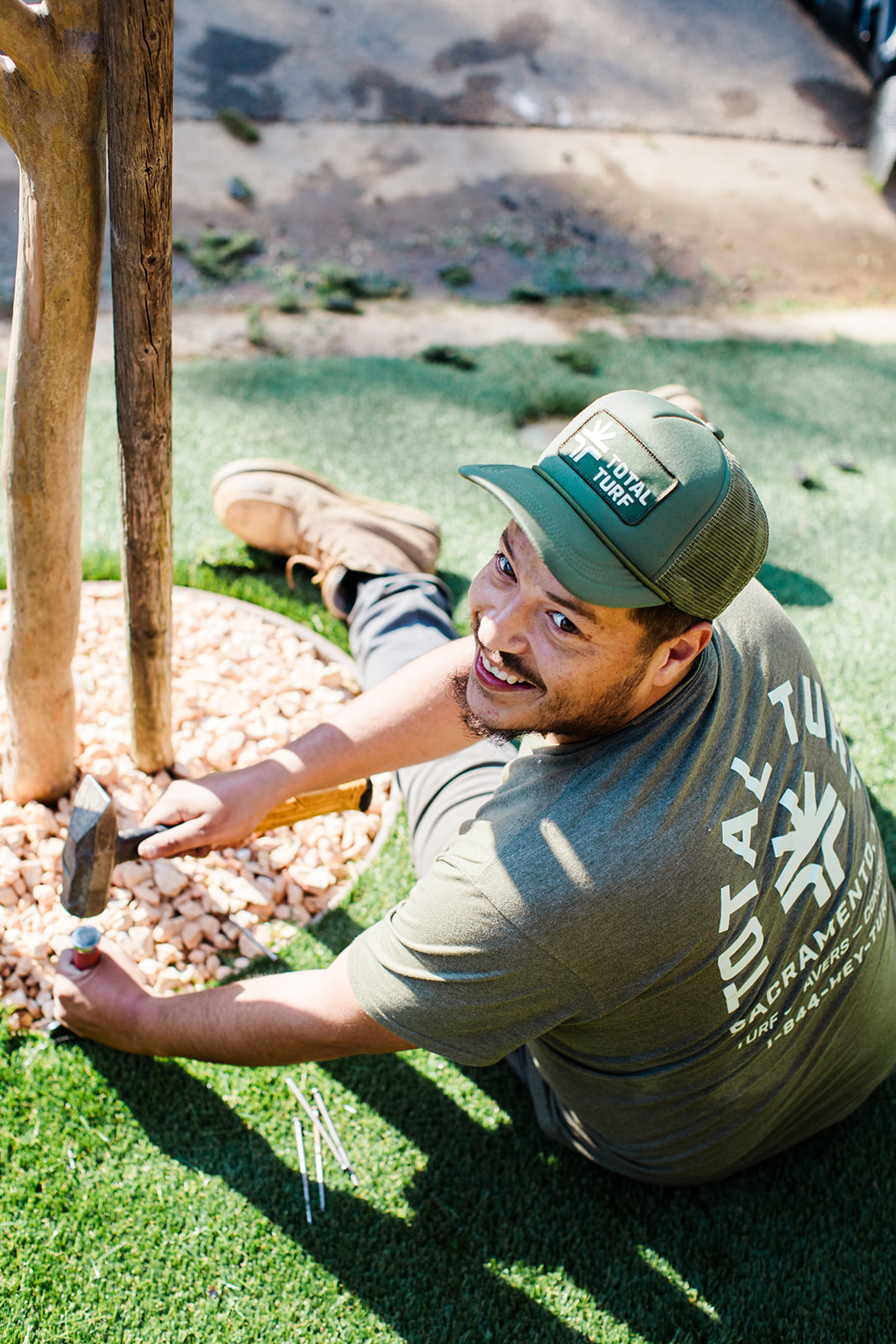
Sacramento turf rebates are real, they're worth pursuing, and they change constantly. Every water district runs its own program on its own schedule, and the rules shift year to year based on drought conditions and state funding. Here's the honest picture of what's available in the Sacramento region in 2026 and how to actually access it.
Who Runs Sacramento Turf Rebate Programs?
There isn't one Sacramento turf rebate — there are several, each operated by a different water agency depending on where you live. Your eligibility and rebate amount depend on which agency provides your water service. The main ones:
- City of Sacramento Department of Utilities — Serves most of the City of Sacramento
- Sacramento County Water Agency — Serves unincorporated county areas
- Sacramento Suburban Water District — Serves north Sacramento County, Citrus Heights, parts of Carmichael
- San Juan Water District — Granite Bay, Folsom, parts of Orangevale
- Roseville Environmental Utilities — City of Roseville
- El Dorado Irrigation District — El Dorado Hills, Cameron Park, parts of Placerville
- Placer County Water Agency — Rocklin, Lincoln, parts of Loomis
You can find your water provider on your water bill — it's usually at the top.
Typical Rebate Amounts
Rebates in the Sacramento region typically range from $1 to $3 per square foot of grass converted to water-efficient landscaping, with caps ranging from 500 to 2,500 square feet depending on the program. For a 1,000 square foot lawn conversion, that's roughly $1,000–$3,000 back in your pocket — not enough to justify the project on its own, but a meaningful offset against installation costs.
Some agencies offer higher amounts for commercial or HOA common-area conversions. A few programs have shifted to offering rebates specifically for "grass-removal" without requiring artificial turf — you can sometimes qualify by replacing grass with decomposed granite, drought-tolerant plants, or a mix including turf.
What You Typically Need to Qualify
Rebate requirements vary but common elements include:
- Proof you're an active water customer at the address
- Pre-conversion photos of existing grass (take these before we arrive)
- Pre-approval in some programs (you apply, wait, then install)
- Minimum square footage (usually 250 sq ft or more)
- Post-conversion photos after installation
- Final inspection in some programs
- Submission within a specific window after install completion
The single biggest mistake homeowners make: starting the conversion before checking whether pre-approval is required. Some programs disqualify any project that began before the application was approved. Check first.
Federal and State Programs
California's statewide turf replacement rebate program has been funded in different forms over the past decade depending on drought declarations and legislative action. Check the Save Our Water website or your local water agency for current state-level funding, which sometimes stacks on top of local programs.
At the federal level, there's no direct turf rebate — but some tax strategies around water efficiency improvements to rental properties may qualify for depreciation. Talk to your CPA.
Common Restrictions to Watch For
Rebate programs almost always have restrictions that trip up homeowners:
Front yard vs. back yard: Some programs only rebate front-yard conversions because front yards face the street and visible water waste is considered a higher priority. Back yards may not qualify.
Minimum project size: Very small conversions (under 250 sq ft) often don't qualify because the administrative cost exceeds the water savings.
Product specifications: Some programs require the artificial turf meet specific environmental standards (permeability, heat reflectivity, recyclability). All the products we install at Total Turf meet these, but verify for your specific rebate.
Irrigation removal: A few programs require you to cap or remove existing irrigation in the converted area as a condition of the rebate. We do this as part of every install anyway.
Residency requirements: Some programs require you to remain in the home for a minimum period after the rebate (often 2–5 years) or the rebate can be clawed back.
The Practical Application Timeline
For most Sacramento-area rebates the timeline looks like this:
- Submit pre-application with photos of existing grass (1–2 weeks to process)
- Receive conditional approval with a project start date window
- Complete your turf installation within that window
- Submit post-install documentation (photos, contractor receipts, measurements)
- Wait for post-install verification (2–6 weeks)
- Receive rebate check in the mail (2–8 weeks after verification)
Total elapsed time from application to check in hand: typically 3–6 months.
How We Help With the Rebate Process
We provide the contractor documentation every rebate program requires: itemized receipt with labor and materials broken out, product specification sheet, installation method statement, pre- and post-install photos, and square footage verification. Some clients handle the application themselves; others want us to help draft the submission. Either way works.
The Honest Expectation
I don't want to oversell rebates. On a $15,000 turf project, a $2,000 rebate is a nice offset — it helps — but it's not a project-justifier. The real financial case for turf in Sacramento is the 15-year cumulative water savings, maintenance elimination, and increased home value. The rebate is a bonus, not the reason to do the project.
That said — if you're going to do it anyway, absolutely pursue the rebate. Leaving $2,000 on the table is silly.